










Shipping Day: How a Batch of Remote Control Mowers Gets Crated for Export
2026-08-14
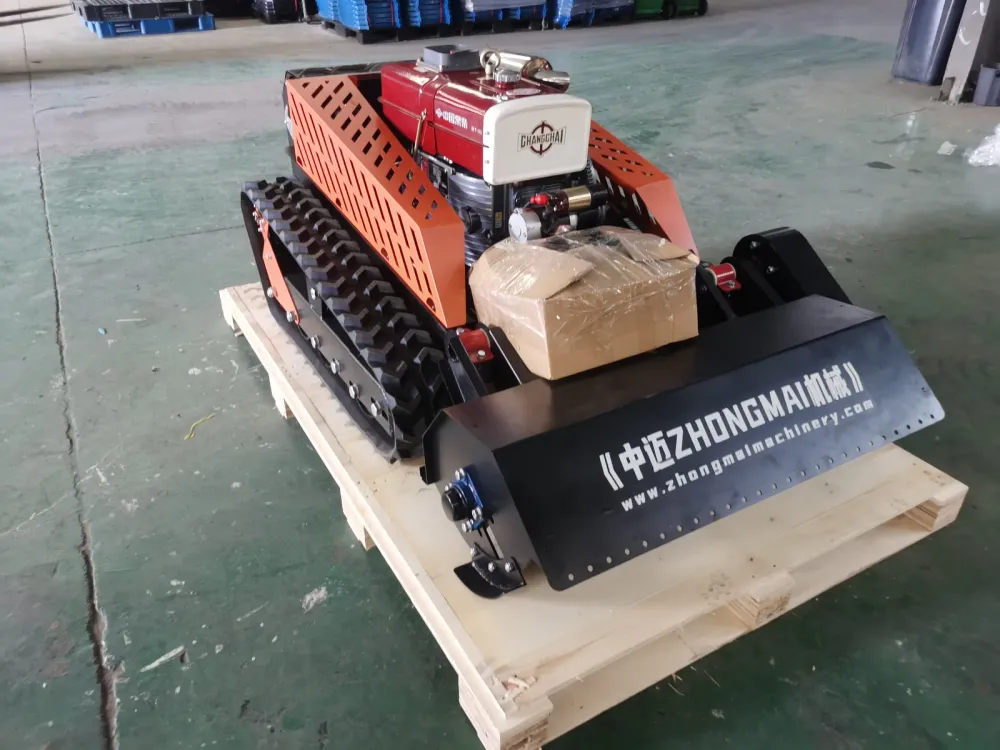
On 14 August a batch of tracked flail mowers left our floor bound for the port of Kaohsiung. This is what the last day of an order actually looks like — pallet, stretch wrap, plywood crate — and what the buyer finds when the lid comes off.
Most of what a buyer ever sees of a factory is photographs of finished machines standing on clean concrete. The day that decides whether those machines arrive in one piece looks different, and it is rarely photographed: the machine is already built, already tested, and the job left is to get it into a box that will survive a forklift, a truck, a crane, a container floor and a customs inspection.
On 14 August we packed a batch of tracked flail mowers for the port of Kaohsiung. Below is the actual sequence, in the order it happened on the floor, with the photos taken that afternoon.
What was in the crates
The machines in this batch are from the flail series: a low, wide tracked chassis carrying a belt-driven flail head at the front, the engine sitting behind it, and an industrial radio link doing the steering. There is no seat and no operator platform anywhere on the machine, because the entire point of it is that nobody stands on the slope being cut.
Two details in the photo matter more than they look. The first is the track — a high-tooth rubber profile rather than a flat agricultural pattern, which is what lets the machine hold a wet bank instead of sliding down it. The second is the flail head: swinging hammer blades on a rotor, not one long spinning bar. Hammers hinge back when they meet a rock or a buried fence post instead of bending a spindle, which is why commercial slope work runs flail heads and lawn work does not. The three series and their engine options are set out on the remote control lawn mower page.
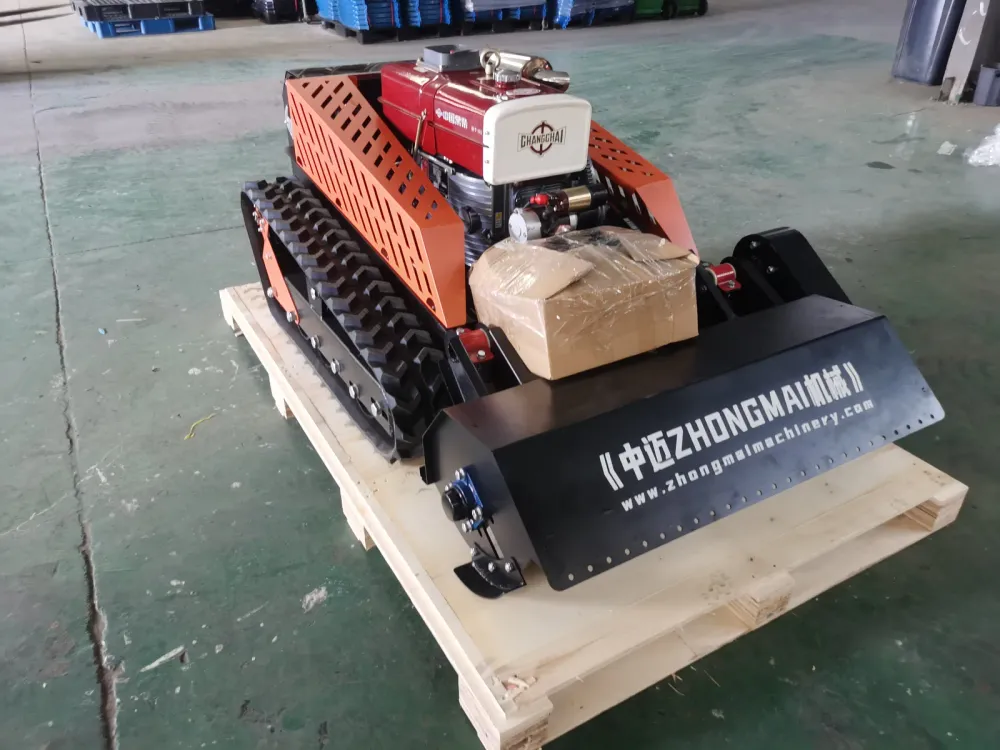
The cutting head stays bolted on
A question that comes up on almost every first order is whether the head ships separately to save volume. On this machine it does not, and that is deliberate. The flail head is belt-driven off the engine and aligned to the chassis; splitting it for shipping hands the receiving end a belt tension and head-height job on day one, usually without the fixture that was used to set it here.
Shipping the machine whole costs a little more air inside the crate and removes an entire class of arrival problems. What does travel separately is the accessory box — spare hammer blades, belts, fasteners, the transmitter and its charger, manuals — strapped onto the same pallet where it cannot chafe against the deck.
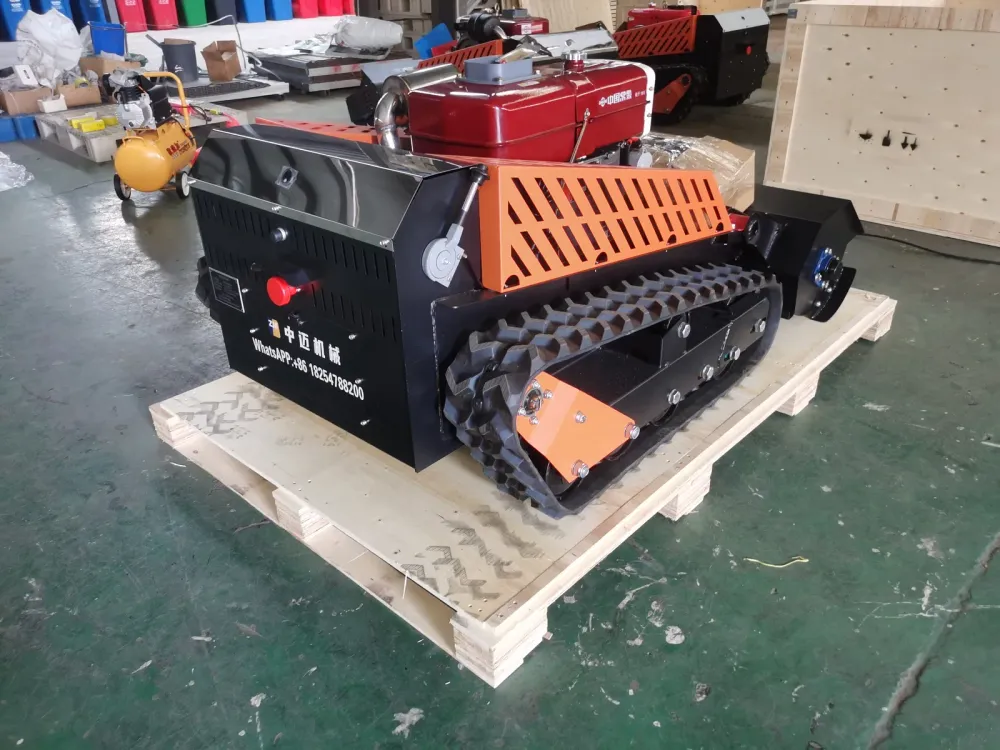
Step one: the machine is fixed to its own pallet
Everything starts with the pallet, and the pallet is sized to the machine rather than the other way round. Rubber tracks are soft. If a machine is simply set down and strapped across the running gear, the straps bite into the track edge and the whole load walks sideways the first time the truck brakes hard. So the machine is positioned with the track pads flat on the deck boards and anchored at the chassis, never over the track, so the load path runs through steel and into the pallet stringers.
This is also the stage where anything free to rotate gets locked down. A flail rotor spinning loose inside a closed crate is a battering ram on a rough road.
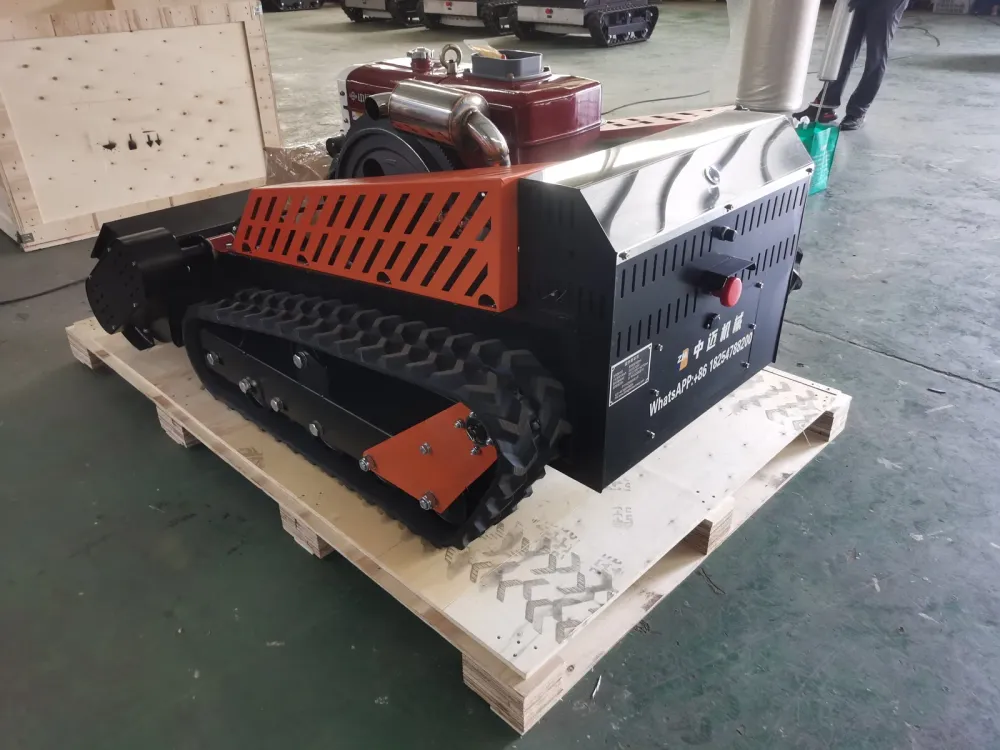
Step two: stretch wrap, which is not about rain
The film that goes on next surprises buyers who assume a sealed crate makes it redundant. Wrap is not the waterproofing layer — a container is not watertight in any case, and film pulled tight over a machine can trap condensation if it is treated as a seal. What the wrap actually does is keep dust, sawdust and loose hardware out of the engine bay and off the hydraulic fittings, and hold cables and small parts tight against the machine so nothing dangles into a crate wall in transit.
Where salt air on a long sea leg is a real concern, the answer is desiccant and a vapour-barrier bag rather than more film, and that gets specified per order and per route.
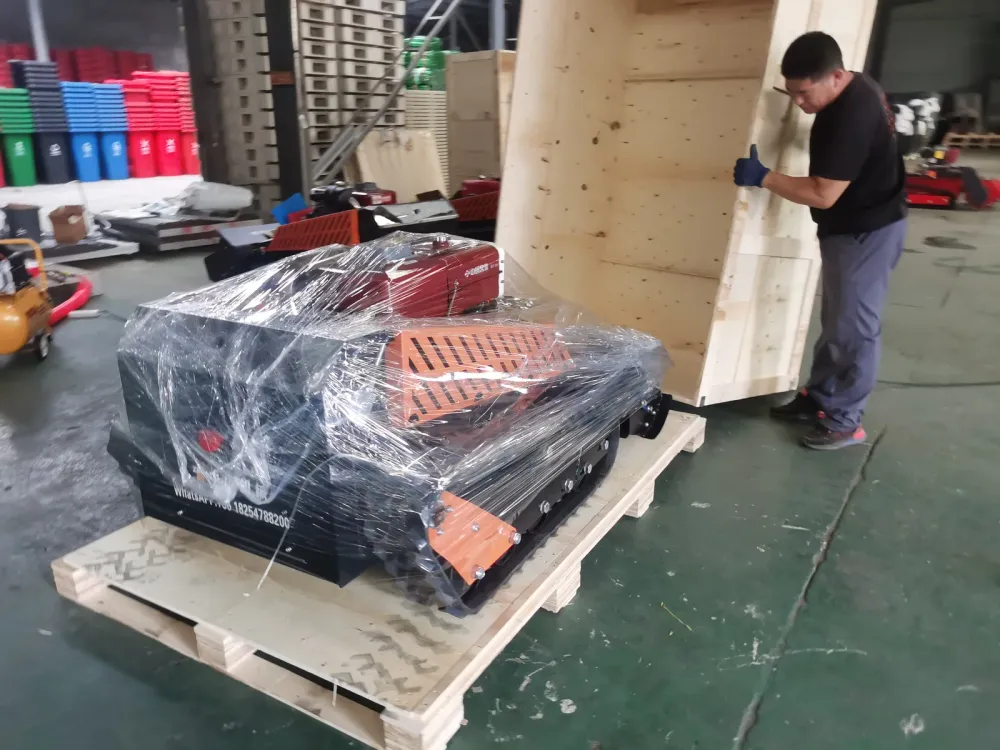
Step three: the crate is built around the machine
The crate is plywood panelling on a timber frame, assembled around the loaded pallet rather than lowered over it. The walls go up one at a time, locking into the pallet frame at the base and into each other at the corners, so the box takes its strength from the frame rather than from the panel faces.
Plywood is the important word there. Solid raw timber crossing most borders needs heat treatment and an ISPM 15 stamp; manufactured plywood is exempt from that requirement, which is why machinery export crates are built this way. It is also worth asking any supplier what their crate is made of before the order ships — a crate held at the destination port for treatment costs more in demurrage and storage than the crate was worth.
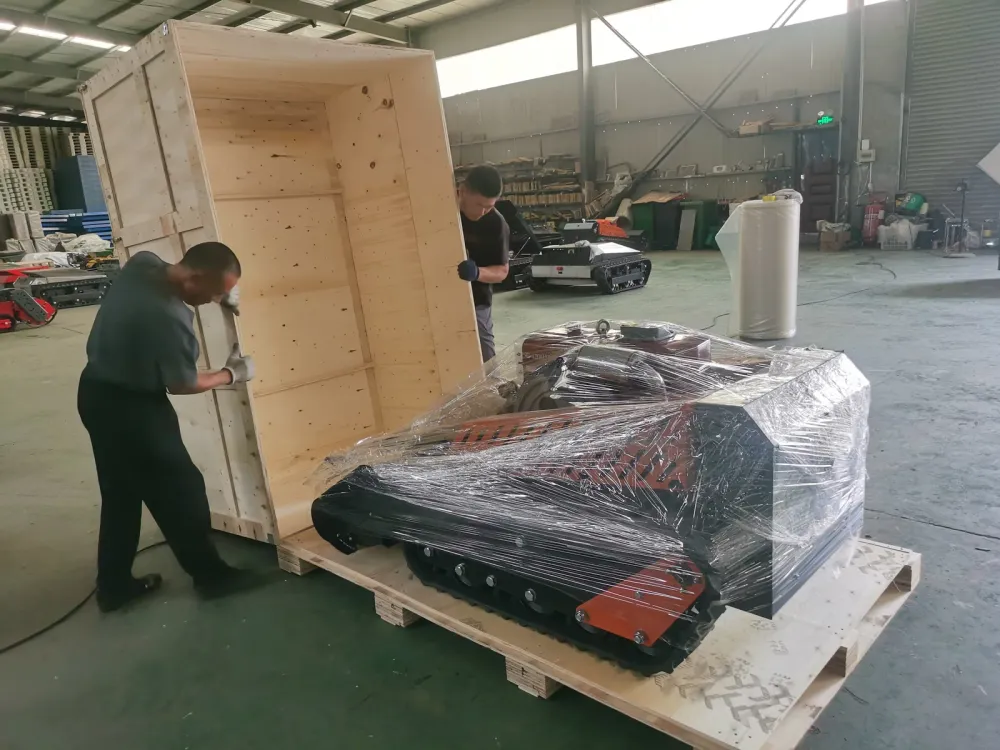
Closing the lid
The lid goes on last, held by steel corner brackets and latches rather than nails alone, so the crate can be opened at the far end without a crowbar and without being destroyed in the process. That matters to anyone reselling the machine: a dealer who can lift a lid cleanly can show a customer the machine and close the box again afterwards.
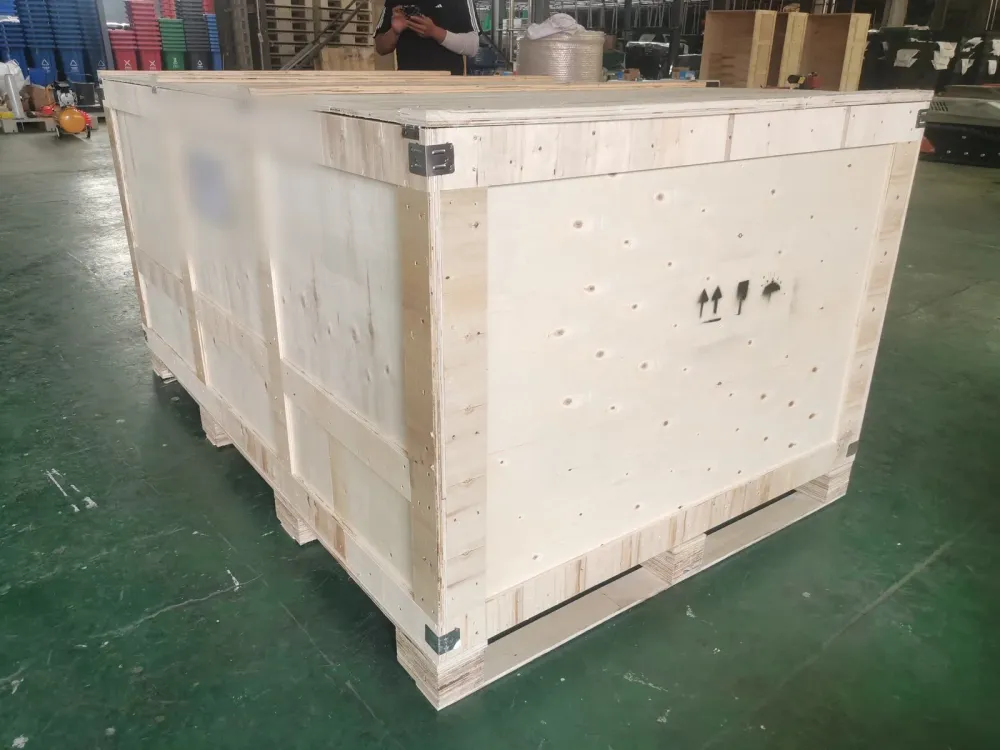
Forklift channels run through the pallet base on both axes, which lets a receiving yard pick the crate up from whichever side the truck happens to present. A crate that can only be lifted from one direction is a crate that eventually gets dropped.
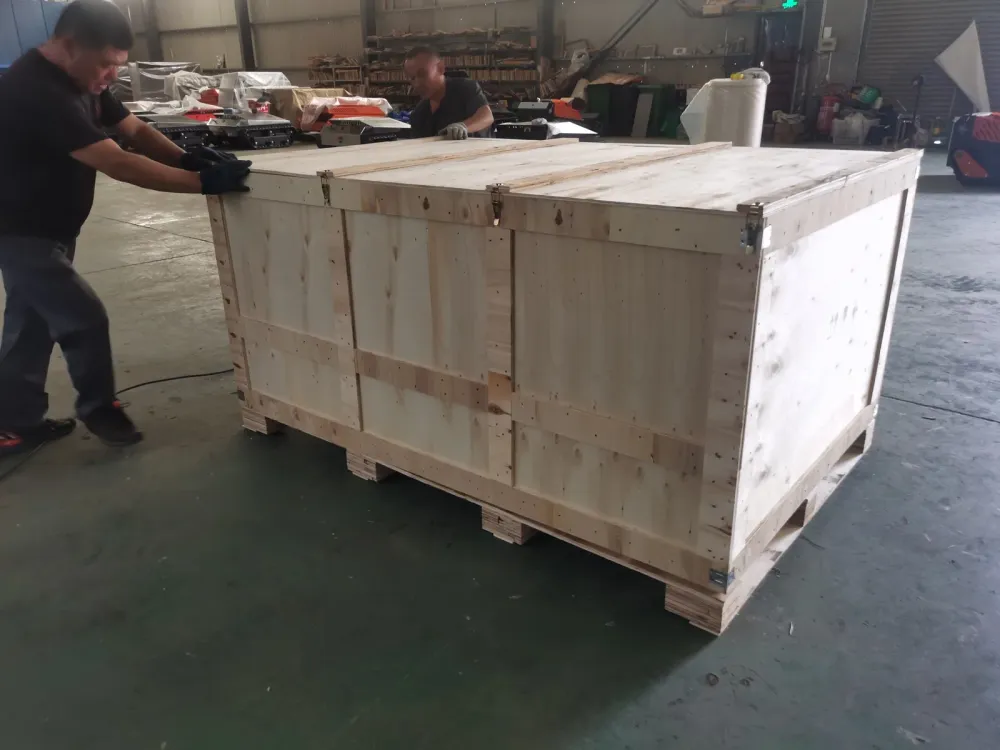
Crates sealed, waiting for the truck
By the end of the afternoon the batch stood as sealed crates on the loading side of the shop, marked and waiting for the truck to the port. Each crate holds one complete machine with its accessory box, and the batch was consolidated for Kaohsiung.
From the buyer's side this is the least visible part of a purchase and the part that most often goes wrong with a cheap supplier. Machines off the same production line can arrive in perfect order or arrive with a bent guard and a scuffed control box, and the difference is almost entirely what happened in the hour these photographs cover.
What to settle before your order is crated
If you are ordering a chinese remote control lawn mower for the first time, a few things are worth fixing in writing while the machines are still being built rather than after they are boxed:
- Cutting head and width, confirmed against the ground you actually mow. A flail head and a rotary deck are not interchangeable choices for the same site — the difference is laid out in our guide to remote mowers for solar farms, levees and slopes.
- The spares that travel in the accessory box. Hammer blades and drive belts are wear items, and the cheapest time to buy them is when they ship freight-free inside the crate.
- Transmitter frequency and the radio rules in your market, plus a spare battery for the handset.
- Crate marking and paperwork — shipping marks, packing list, and whatever certificate of origin or CE documentation your customs broker will ask for.
- Whether the machines carry your own colour and logo. That is decided before paint, not before packing.
If a slope on your own site is the reason you are reading this, the practical starting point is the machine class rather than the crate: our notes on choosing a mower for steep slopes and hills cover what actually limits a machine on grade.
Browse our chinese remote control lawn mower range · — we reply within one business day.
Frequently asked questions
How is a remote control mower packed for sea freight?
Each machine is anchored to its own pallet at the chassis, wrapped to keep dust and debris out of the engine bay, then enclosed in a plywood crate built around it on a timber frame. The accessories — transmitter, charger, spare blades and belts, manuals — ride in a box strapped to the same pallet. One complete machine per crate.
Does the cutting head ship separately?
No. The flail head is belt-driven and aligned to the chassis at the factory, so it stays bolted on. Splitting it would save a little crate volume and hand the receiving end a belt tension and head-height job it has no fixture for.
Do the crates need fumigation or an ISPM 15 stamp?
The crates are plywood on a timber frame. Manufactured plywood is exempt from the heat-treatment requirement that applies to solid raw timber packaging, which is the usual reason machinery crates are built this way. Confirm the rule for your own destination with your customs broker before the order ships.
How many machines fit in a container?
It depends on the series and cutting width, because the crate footprint follows the machine. We confirm crate dimensions and gross weight per model with the quotation and consolidate the batch so the container is filled rather than shipping air.
Can the machines be supplied in my own brand colour?
Yes — OEM colour and logo are supported for importers and dealers, and both are settled before the machines are painted, well ahead of the packing stage.
Related articles
A Buyer from New Zealand Spent a Morning on Our Mini Excavator Floor
On 2 September a buyer from New Zealand walked our workshop, then took two mini excavators into the test area and ran them himself. This is what he looked at, what he asked, and what any buyer should do with a day at a factory.
Read more →
Skid Steer Weight: Operating Weight by Class, Mini to Large Frame
How much does a skid steer weigh? It depends on frame class, undercarriage, and whether you mean operating weight, shipping weight, or rated capacity. This guide breaks down skid steer weight from stand-on minis to large-frame machines, explains tracked vs wheeled weight differences, and covers what the number means for trailer selection and towing rules.
Read more →
Amphibious Mini Excavators: Working on Water, Marshes & Wetlands
A clear-headed guide to amphibious and floating mini excavators — how pontoon undercarriages work, where they outperform standard machines, their real limitations, and when wide rubber tracks are the smarter choice for wet and soft-ground work.
Read more →